Memory on Modafinil: Separating Genuine Encoding Effects from Alertness-Mediated Performance Gains
Modafinil entered the US market with a straightforward clinical identity: a wakefulness-promoting agent indicated for narcolepsy, shift work sleep disorder, and obstructive sleep apnea-related fatigue. Yet the drug's off-label reputation has always traveled further, particularly in academic and professional environments where memory performance—not merely wakefulness—is the currency of success. The question that clinical researchers have been attempting to resolve for more than two decades is whether modafinil exerts a genuine, pharmacologically distinct effect on memory processes, or whether its cognitive benefits are essentially downstream consequences of keeping users awake and attentive.
The answer, as the accumulated evidence now suggests, is neither straightforwardly affirmative nor dismissive. The picture is considerably more nuanced.
The Neurochemical Substrate: Why Memory Effects Are Plausible
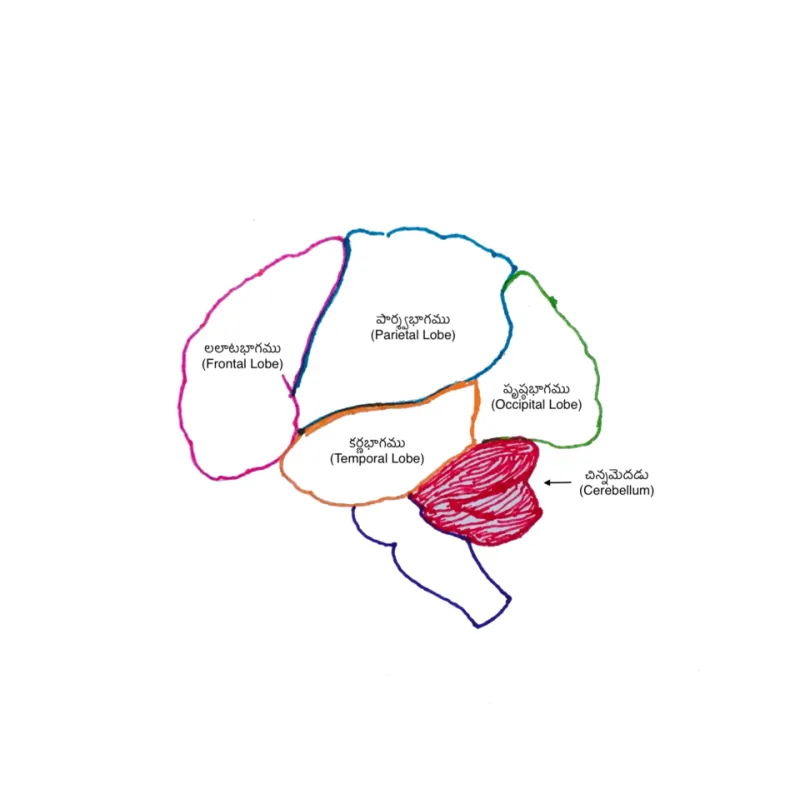
Understanding modafinil's potential impact on memory requires a brief examination of its neurochemical profile. Unlike classical stimulants, modafinil does not produce broad catecholamine flooding. Its primary mechanism involves inhibition of the dopamine transporter (DAT), with secondary effects on norepinephrine, histamine, orexin, and serotonin systems. Crucially, the prefrontal cortex (PFC)—a region central to working memory and episodic memory encoding—is particularly sensitive to dopaminergic and noradrenergic tone.
Research using functional MRI has demonstrated that modafinil modulates PFC activation during working memory tasks, with several studies reporting enhanced efficiency rather than simple upregulation—meaning comparable or superior performance with reduced neural expenditure. This metabolic efficiency hypothesis aligns with the drug's proposed mechanism of optimizing rather than overwhelming cortical circuits.
Additionally, modafinil's influence on the hippocampus, the brain's primary memory consolidation hub, has been examined in animal models. Rodent studies have shown facilitated long-term potentiation (LTP) under modafinil conditions, though direct translation to human hippocampal function remains an area of ongoing investigation.
What Controlled Trials Actually Show
The clinical trial landscape on modafinil and memory is heterogeneous, reflecting variability in study populations, dosing protocols, and memory assessment instruments. Several key findings, however, deserve careful attention.
A frequently cited 2003 study published in Psychopharmacology by Turner and colleagues at the University of Cambridge examined modafinil's effects on a battery of neuropsychological tests in healthy non-sleep-deprived volunteers. Results indicated improvements in spatial working memory, planning, and sustained attention, but effects on episodic memory were more modest. Critically, the researchers noted that benefits were most pronounced in subjects with lower baseline cognitive performance, a pattern that has since been replicated across multiple studies and is now sometimes referred to as the "baseline dependency" effect.
More recent work has attempted to isolate encoding versus retrieval phases. A 2014 investigation found that modafinil administered prior to learning—rather than immediately before recall testing—produced stronger memory performance, suggesting a preferential effect on encoding processes rather than retrieval per se. This timing sensitivity has significant practical implications: users who consume modafinil at the point of recall, such as during an examination, may derive less benefit than those who use it during the original study period.
Sleep-dependent memory consolidation presents another dimension. Modafinil's well-documented suppression of slow-wave sleep raises a counterintuitive concern: if the drug is used during waking hours to enhance encoding but subsequently disrupts the sleep architecture necessary for overnight consolidation, net memory gains may be partially offset. This interaction has not been fully characterized in longitudinal clinical studies, and it represents one of the more important unresolved questions in the field.
The Alertness Confound: A Methodological Challenge
Perhaps the most persistent challenge in this literature is methodological: isolating modafinil's mnemonic effects from its alertness-promoting properties. Memory performance is exquisitely sensitive to arousal state. A subject who is more alert, more attentive, and less susceptible to mind-wandering will almost invariably encode information more effectively, regardless of whether any direct mnemonic pharmacology is at play.
Several investigators have attempted to control for this confound by testing modafinil in fully rested, non-sleep-deprived participants—a design intended to remove the alertness advantage. Results under these conditions are notably less consistent. Some studies demonstrate residual memory benefits independent of wakefulness; others show minimal effect once alertness is held constant. A 2017 meta-analysis examining cognitive enhancement in healthy individuals concluded that modafinil's effects on memory were "small to moderate" and were significantly attenuated when studies controlled adequately for baseline sleep quality.
This does not render the drug's memory-related benefits illusory. Rather, it suggests that for many users—particularly those operating under conditions of sleep restriction, shift work, or high cognitive load—modafinil may produce functionally meaningful memory improvements through a combination of direct encoding facilitation and indirect alertness optimization.
Implications for Clinical Practice and Informed Use
For medical professionals counseling patients who use or are considering modafinil for cognitive enhancement purposes, several evidence-based points warrant discussion.
First, the drug's memory benefits appear most reliable in contexts of sleep deprivation or suboptimal alertness, rather than as a general-purpose mnemonic enhancer in well-rested individuals. Second, timing of administration relative to the learning episode likely matters: pre-encoding use appears more pharmacologically rational than pre-recall use based on available data. Third, the potential interaction between modafinil-induced sleep architecture changes and consolidation processes should be discussed, particularly with users who take the drug late in the day.
Finally, the baseline dependency effect carries important clinical nuance. Individuals with lower baseline working memory capacity may derive proportionally greater benefit—a finding that complicates uniform prescribing recommendations and reinforces the value of individualized assessment.
Looking Ahead: Neuroimaging and the Future of Precision Cognitive Pharmacology
Advances in neuroimaging methodology are beginning to provide mechanistic clarity that behavioral studies alone cannot offer. Task-based fMRI paradigms, combined with pharmacological challenge designs, are increasingly capable of identifying which memory subprocesses—encoding specificity, pattern separation, associative binding—are preferentially modulated by modafinil. Longitudinal studies tracking memory outcomes in professional populations, including medical residents and military personnel, represent another frontier.
What the current evidence does not yet support is a blanket characterization of modafinil as a robust memory-enhancing drug in the manner that popular discourse sometimes implies. The science is more conditional, more population-specific, and more timing-dependent than that framing allows. For clinicians and informed patients alike, that conditionality is not a limitation of the drug—it is a call for precision in how it is understood and used.