Prefrontal Power and Its Limits: What Modafinil Really Does to Judgment, Impulse Control, and Decision-Making Under Pressure

Photo: Adriaen Brouwer, Public domain, via Wikimedia Commons
Beyond the Alertness Narrative
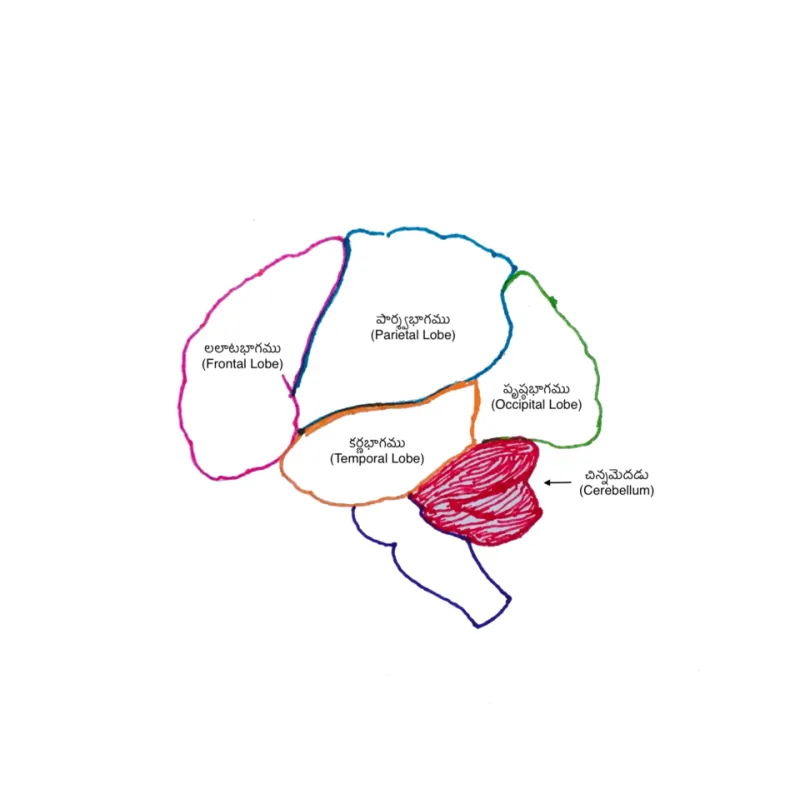
For most of its clinical life in the United States, modafinil has been framed primarily as a wakefulness agent — a pharmacological antidote to shift-work disorder, narcolepsy, and sleep deprivation-related impairment. That framing, while accurate in a narrow sense, dramatically undersells what the drug is actually doing inside the brain. A growing body of neuroimaging and cognitive performance research now makes it clear that modafinil exerts measurable influence on the prefrontal cortex (PFC), the neurological seat of planning, impulse control, working memory, and complex decision-making.
For clinicians whose patients operate in high-pressure professional environments — surgical suites, trading floors, cockpits, emergency departments — this distinction matters enormously. Wakefulness is a prerequisite for performance; it is not the same thing as optimal judgment.
What the Prefrontal Evidence Actually Shows
Modafinil's primary mechanism involves inhibition of dopamine reuptake, with secondary effects on norepinephrine, histamine, and orexin signaling. The dopaminergic activity in the PFC is of particular clinical interest. The prefrontal cortex is exquisitely sensitive to catecholamine levels, and research consistently demonstrates an inverted-U relationship between dopamine tone and cognitive performance: too little impairs function, too much does as well.
A landmark study published in Neuropsychopharmacology found that modafinil improved performance on tasks measuring spatial working memory and planning in healthy, non-sleep-deprived volunteers. Functional MRI data from related investigations revealed increased PFC activation during cognitively demanding tasks following modafinil administration. Importantly, these effects were most pronounced in individuals with lower baseline cognitive performance — a finding with meaningful implications for how clinicians should think about patient selection.
For individuals already operating at high cognitive baselines — elite professionals whose prefrontal function is well-optimized under normal conditions — the net benefit may be considerably more modest, and the risk profile shifts accordingly.
The Overconfidence Paradox
Perhaps the most clinically underappreciated phenomenon associated with modafinil use in high-stakes environments is what researchers have begun calling the overconfidence paradox. Several controlled studies examining modafinil's effects on decision-making quality — as opposed to decision-making speed — have produced findings that should give prescribers pause.
A study conducted with healthy participants performing gambling tasks found that modafinil increased risk-taking behavior and, in some paradigms, impaired the ability to reverse decisions when feedback indicated an error. This pattern is consistent with a well-documented pharmacological phenomenon: dopaminergic enhancement in the PFC can improve cognitive flexibility in some domains while simultaneously reducing sensitivity to negative reinforcement signals.
In plain terms, a surgeon or trader operating on modafinil may execute tasks with greater speed and subjective confidence while simultaneously becoming marginally less attuned to the warning signals that should prompt reconsideration. The drug enhances the feeling of cognitive clarity more reliably than it guarantees actual decision quality.
This is not a reason to dismiss modafinil's utility in professional contexts. It is, however, a compelling reason to distinguish between the types of cognitive demands a given professional faces. Routine task execution under fatigue — performing a well-rehearsed procedure, executing a defined protocol — may genuinely benefit from modafinil-assisted wakefulness and attentional sharpening. Novel problem-solving under uncertainty, where adaptive judgment and error sensitivity are paramount, presents a more complex picture.
Impulse Control: A Dose-Dependent Consideration
The relationship between modafinil and impulse control is similarly nuanced. At standard clinical doses (100–200 mg), modafinil has demonstrated pro-cognitive effects on inhibitory control tasks in multiple studies involving both sleep-deprived and rested subjects. The drug appears to reduce impulsive responding on tasks like the Stop Signal Task, suggesting genuine improvement in behavioral inhibition.
However, at higher doses or in individuals with certain dopaminergic profiles, this benefit may attenuate or reverse. Clinicians should be aware that the dose-response curve for executive function is not linear, and that patients self-escalating doses — a behavior not uncommon among high-achieving professionals seeking maximal cognitive enhancement — may be operating in a pharmacological range where the risk-benefit calculus shifts unfavorably.
The practical implication is clear: prescribers working with patients in high-stakes occupations should establish explicit dosing agreements and monitor not only for adverse effects in the traditional sense, but for subtle changes in professional judgment that the patient themselves may not recognize.
Occupational Context and Clinical Relevance
The evidence base for modafinil's cognitive effects in specific occupational groups remains limited by ethical and logistical constraints on controlled research. Military-funded studies have examined modafinil's utility in sustaining performance during extended operations, generally finding benefit for sleep-deprived individuals on tasks requiring sustained attention and psychomotor vigilance. The U.S. military has acknowledged modafinil as an approved fatigue countermeasure for certain aviation applications.
For surgeons, the relevant literature is sparse but suggestive. Studies examining sleep-deprived surgical residents have found improvements in simulated task performance following modafinil administration. What these studies cannot adequately capture is the impact on intraoperative judgment — the capacity to recognize when a situation has moved outside expected parameters and a different approach is required.
Financial professionals represent a particularly interesting population. Trading decisions involve probabilistic reasoning under time pressure, conditions under which modafinil's enhancement of attentional focus may conflict with its potential to blunt sensitivity to loss-related signals. No controlled studies have examined this population directly, but the theoretical framework drawn from the existing decision-making literature warrants serious clinical attention.
What Practitioners Should Communicate to Patients
For clinicians whose patients are using or considering modafinil in professional contexts, several evidence-based counseling points emerge from the current literature.
First, the drug's cognitive benefits are most reliably demonstrated in the context of sleep deprivation or fatigue — not as a performance enhancer above a rested baseline. Patients should be disabused of the notion that modafinil will make them categorically better at their jobs under normal conditions.
Second, the types of cognitive tasks most likely to benefit differ from those most at risk for subtle impairment. Structured, well-defined tasks respond more predictably to modafinil's effects than open-ended judgment calls requiring adaptive reasoning.
Third, subjective confidence is an unreliable guide. Patients should be counseled that the subjective experience of enhanced clarity and focus that modafinil produces does not map perfectly onto objective decision quality, and that this discordance is itself a clinically meaningful risk.
Finally, any discussion of modafinil use in professional contexts should include a frank conversation about the regulatory and liability landscape in the patient's specific occupation. Pilots, for instance, operate under FAA medical certification requirements that have specific implications for psychoactive medication use.
Modafinil is a sophisticated pharmacological tool. Used with clinical precision and honest patient education, it can serve legitimate purposes in demanding professional environments. Used without that precision, it may confer confidence without commensurate competence — a combination that carries its own category of risk.