Why Modafinil Works Differently in Different People: A Pharmacogenomics Primer for the Personalized Medicine Era
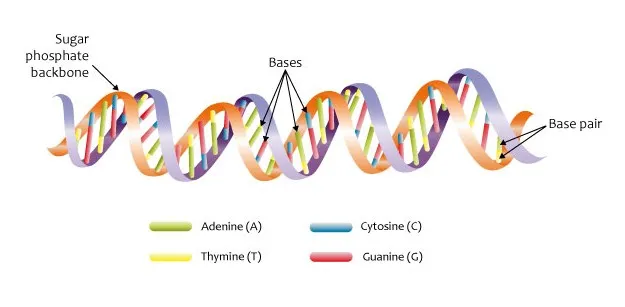
Photo: Genomics Education Programme, CC BY 2.0, via Wikimedia Commons
Anyone who has spent time in clinical practice or followed patient forums dedicated to cognitive enhancement will have encountered the same striking inconsistency: modafinil produces robust, reliable wakefulness and executive function benefits in some individuals, while leaving others functionally unchanged—or worse, generating headaches, anxiety, and gastrointestinal disturbance at standard doses. This is not anecdote. It is a reproducible, clinically documented phenomenon that has frustrated both prescribers and patients for years.
The explanation, it turns out, is written in the genome.
Pharmacogenomics—the study of how genetic variation influences drug response—offers a rigorous framework for understanding inter-individual variability in modafinil efficacy and tolerability. As genetic testing becomes more accessible and less expensive in the United States, the integration of pharmacogenomic data into prescribing decisions is transitioning from theoretical aspiration to practical clinical tool. For a drug as widely used as modafinil, that transition cannot come soon enough.
CYP3A4: The Central Variable in Modafinil Metabolism
Modafinil is metabolized primarily in the liver, with the cytochrome P450 enzyme CYP3A4 serving as the dominant metabolic pathway. This enzyme is responsible for the biotransformation of modafinil into its primary metabolite, modafinil acid, which is pharmacologically inactive. The rate at which CYP3A4 performs this conversion determines how long active modafinil remains in systemic circulation—and therefore how pronounced and sustained its pharmacological effects will be.
Here is where genetics enters the picture: CYP3A4 is among the most polymorphic drug-metabolizing enzymes in the human genome. More than 40 functionally distinct allelic variants have been identified, with population frequencies varying substantially across ethnic groups. These variants produce a spectrum of enzymatic activity that ranges from near-complete loss of function to markedly enhanced metabolic capacity.
In pharmacogenomic terminology, individuals are broadly classified as:
- Poor metabolizers (PM): Carry two loss-of-function alleles; CYP3A4 activity is severely reduced, leading to elevated plasma drug concentrations and prolonged half-life
- Intermediate metabolizers (IM): One reduced-function allele; moderately reduced clearance
- Normal (extensive) metabolizers (NM/EM): The reference population; standard drug clearance
- Rapid or ultrarapid metabolizers (RM/UM): Enhanced CYP3A4 activity; accelerated drug clearance and potentially subtherapeutic plasma levels
For modafinil at a standard dose of 200 mg, these metabolic phenotypes translate directly into clinically meaningful differences in area under the plasma concentration-time curve (AUC), peak plasma concentration (Cmax), and elimination half-life. A poor metabolizer may achieve plasma levels two to three times higher than an ultrarapid metabolizer at identical doses—a difference sufficient to explain why one patient reports an overwhelming response while another reports none at all.
Beyond CYP3A4: The Role of CYP2C19 and Drug Transporter Genes
While CYP3A4 is the primary metabolic engine for modafinil, it is not the only genetic variable of clinical relevance. CYP2C19 contributes a secondary metabolic pathway and is itself highly polymorphic. Notably, CYP2C19 also mediates modafinil's inhibitory effect on its own metabolism—a phenomenon known as autoinhibition—which can complicate dose-response predictions in patients with atypical CYP2C19 activity.
Patients carrying the CYP2C19 *17 allele (an ultrarapid metabolizer variant common in Northern European and some East Asian populations) may experience altered modafinil pharmacokinetics through this secondary pathway, particularly with repeated dosing. Conversely, CYP2C19 poor metabolizers—a phenotype found in approximately 2–5% of Caucasian Americans and up to 15–20% of some Asian American subpopulations—may experience compounded drug accumulation when both primary and secondary clearance pathways are compromised.
Emerging research has also implicated genetic variation in drug transporter proteins, particularly ABCB1 (encoding P-glycoprotein) and SLCO1B1 (encoding OATP1B1), in modulating modafinil's distribution into the central nervous system and its hepatic uptake. Polymorphisms in these transporters could theoretically affect not only systemic drug levels but also the degree to which modafinil penetrates the blood-brain barrier—a variable that may partially explain why some patients report cognitive effects that seem disproportionate to their measured plasma concentrations.
Dopaminergic Receptor Genetics: The Efficacy Side of the Equation
Metabolic pharmacogenomics explains much of the variability in drug exposure, but it does not fully account for differences in pharmacodynamic response—that is, how the brain responds to modafinil once it arrives. For this, researchers have turned to the genetics of the dopaminergic system itself.
Modafinil's primary pharmacodynamic action involves inhibition of the dopamine transporter (DAT), encoded by the SLC6A3 gene. A well-characterized variable number tandem repeat (VNTR) polymorphism in the 3' untranslated region of SLC6A3 influences DAT expression levels in the striatum and prefrontal cortex. Individuals carrying the 10-repeat allele—the most common variant in American populations—express higher DAT density than those with the 9-repeat allele, meaning they have more transporter targets for modafinil to inhibit. Some research suggests this may correlate with greater dopaminergic response to modafinil, though the relationship is not linear and remains an active area of investigation.
Additionally, polymorphisms in the COMT gene—which encodes catechol-O-methyltransferase, an enzyme that degrades dopamine in the prefrontal cortex—have been associated with differential responses to dopaminergic drugs broadly. The well-studied Val158Met polymorphism produces a high-activity (Val/Val) enzyme variant that rapidly clears prefrontal dopamine, and a low-activity (Met/Met) variant that allows dopamine to accumulate. Theoretical models and some empirical data suggest that modafinil's effects on prefrontal executive function may be more pronounced in Val/Val individuals, who have lower baseline dopamine tone—an application of the inverted-U model of dopaminergic optimization in cognitive performance.
Practical Implications: Should Genetic Testing Inform Modafinil Prescribing?
The evidence reviewed here raises a straightforward practical question: should clinicians order pharmacogenomic testing before prescribing modafinil? The honest answer, as of current evidence, is that routine testing is not yet standard of care—but it is increasingly defensible in specific clinical contexts.
For patients who have experienced unexpectedly intense side effects at standard doses, CYP3A4 and CYP2C19 phenotyping could guide dose reduction. For patients reporting absent therapeutic effect despite apparent adherence, an ultrarapid metabolizer phenotype might justify dose escalation or more frequent dosing intervals. Several commercial pharmacogenomic testing panels available in the US—including those offered by GeneSight, Genomind, and Mayo Clinic Laboratories—include CYP3A4 and CYP2C19 genotyping alongside broader psychiatric medication panels, making this information increasingly accessible in clinical workflows.
What the field does not yet have is a validated, modafinil-specific pharmacogenomic dosing algorithm. That gap represents both a limitation of current evidence and a compelling opportunity for future research. As cognitive enhancement medicine matures as a discipline, the integration of genomic data into prescribing decisions for agents like modafinil may well become not just useful, but expected.
The heterogeneity of modafinil response is not a mystery to be dismissed—it is a signal to be decoded. Pharmacogenomics provides the analytical tools to do exactly that.