Wakefulness at What Cost: A Neurological Examination of How Modafinil Reshapes Sleep Architecture
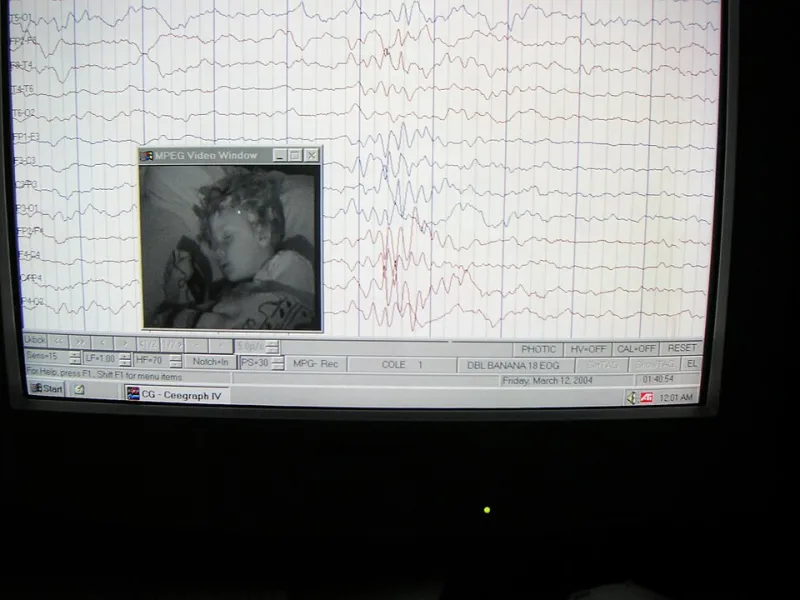
Photo: Jemaleddin Cole from Glen Burnie, USA, CC BY-SA 2.0, via Wikimedia Commons
Rethinking the "Clean" Stimulant Narrative
Among the pharmacological properties that have made modafinil attractive to clinicians, researchers, and off-label users alike is its reputation for producing wakefulness without the sleep rebound, architectural distortion, and dependency potential associated with amphetamine-class stimulants. This characterization is not entirely inaccurate — but it is incomplete in ways that matter clinically, particularly for individuals who use the drug chronically or during periods when sleep quality is already compromised.
Understanding modafinil's relationship to sleep requires moving beyond the simple binary of "wakefulness promotion" versus "sedation" and engaging instead with the nuanced neurophysiology of sleep architecture: the cyclical progression through non-REM stages — including the critically restorative slow-wave sleep of stages N2 and N3 — and the REM phase that serves functions ranging from emotional memory consolidation to synaptic homeostasis. Any pharmacological agent that influences the timing, duration, or structure of these stages exerts effects that extend well beyond the waking hours during which it is active.
Modafinil's Neurochemical Footprint on Sleep-Wake Regulation
To appreciate how modafinil influences sleep architecture, one must first understand the neurochemical systems it engages. The drug's primary mechanism involves inhibition of the dopamine transporter (DAT), which elevates extracellular dopamine in the nucleus accumbens and prefrontal cortex. Secondary effects include enhanced noradrenergic transmission, histamine release from the tuberomammillary nucleus, and — crucially — activation of the orexin (hypocretin) system, the neuropeptide network whose dysfunction underlies narcolepsy.
Orexin neurons in the lateral hypothalamus play a central role in stabilizing wakefulness and suppressing sleep transitions, particularly into REM. By amplifying orexinergic tone, modafinil does not merely promote wakefulness as an incidental effect — it actively modulates the neurochemical gating mechanisms that regulate the sleep-wake boundary. This is not a trivial distinction: it means that modafinil's influence on sleep is mechanistically embedded in the same circuitry that governs sleep architecture, not simply a downstream consequence of extended wakefulness.
REM Sleep: Suppression, Rebound, and Memory Consolidation
Polysomnographic studies examining modafinil's effects on sleep following daytime administration have produced a consistent pattern: dose-dependent reductions in REM sleep duration, particularly during the first half of the recovery sleep period, with partial REM rebound in subsequent sleep cycles. A 2000 study in Sleep examining modafinil's effects on nocturnal sleep following daytime administration to healthy volunteers found significant reductions in REM percentage at doses of 200 mg and above, with corresponding increases in sleep-onset latency.
The clinical significance of REM suppression is context-dependent but should not be minimized. REM sleep is the stage most closely associated with procedural memory consolidation, emotional regulation, and the integration of newly acquired information into existing cognitive schemas. For medical trainees, shift workers, or knowledge workers who depend on modafinil to extend productive hours, the irony is pointed: the drug may compromise the very consolidation processes that give the extended waking hours their cognitive value.
It is worth noting that this REM-suppressing effect is considerably less pronounced than that observed with traditional stimulants. Amphetamine-class agents produce substantially greater REM suppression and more severe rebound phenomena upon discontinuation. In this relative sense, modafinil's profile is indeed more favorable — but "less disruptive than amphetamines" is a lower bar than "non-disruptive," and the latter is the implicit claim in much popular discourse about the drug.
Slow-Wave Sleep: The Underappreciated Casualty
While REM effects receive the majority of attention in discussions of stimulant-related sleep disruption, slow-wave sleep (SWS) — comprising N3 stage sleep — may be the more functionally critical casualty of chronic modafinil use in certain populations. SWS is the primary stage during which the glymphatic system performs its clearance of metabolic waste products from the brain, including amyloid-beta and tau proteins whose accumulation is implicated in neurodegenerative pathology. It is also the stage most directly associated with declarative memory consolidation and immune function restoration.
Research on modafinil's effects on SWS is more limited than REM-focused literature, but available data suggest that while the drug does not suppress SWS as dramatically as it affects REM, the indirect effects of sleep-onset delay and total sleep time reduction — both of which modafinil can produce when taken in the afternoon — translate into reduced SWS opportunity. For users who consistently shorten their sleep window to accommodate modafinil-extended waking hours, cumulative SWS debt may develop in ways that are not immediately apparent subjectively but are measurable neurologically.
Circadian Rhythm Interference: Timing Is Everything
Modafinil's interaction with the circadian system represents perhaps the least-discussed dimension of its sleep-related pharmacology. The drug's half-life of approximately 12 to 15 hours means that a standard 200 mg dose taken at 8:00 a.m. will still be present at therapeutically relevant plasma concentrations by 8:00 p.m. — a period that, for most individuals, coincides with the natural rise in melatonin secretion and the onset of circadian sleep pressure.
Chronic disruption of the timing and quality of sleep onset can produce measurable shifts in circadian phase, particularly in individuals with already-irregular sleep schedules. Shift workers using modafinil to manage rotating schedules face an additional layer of complexity: the drug may blunt the subjective experience of circadian misalignment without correcting the underlying physiological desynchrony, potentially masking symptoms that would otherwise prompt adaptive behavioral changes.
Comparative data on other wakefulness-promoting agents are instructive here. Armodafinil — the R-enantiomer of modafinil — achieves higher peak plasma concentrations with a longer effective duration, which some pharmacologists argue makes its circadian interference potential greater than the racemic compound at equivalent therapeutic doses. Solriamfetol, a newer dual dopamine-norepinephrine reuptake inhibitor approved for excessive daytime sleepiness, has a shorter half-life of approximately seven hours, which may confer meaningful advantages for sleep architecture preservation in patients who require evening-hour coverage.
Evidence-Based Recommendations for Clinical Practice
Several practical principles emerge from this synthesis of sleep neuroscience and modafinil pharmacology.
Dose timing is the most modifiable variable. Administering modafinil as early in the waking day as possible minimizes plasma concentration at the time of intended sleep onset. For most users, this means administration no later than mid-morning for an anticipated sleep window beginning in the evening.
Total sleep time must be actively protected. Modafinil's capacity to attenuate subjective sleepiness creates a behavioral risk: users may interpret reduced sleep drive as evidence that less sleep is needed, when in fact the neurological requirement for sleep has not diminished. Clinicians prescribing modafinil should explicitly counsel patients on the importance of maintaining adequate sleep opportunity regardless of subjective alertness levels.
Chronic use warrants periodic reassessment. For patients using modafinil on a long-term basis, periodic polysomnographic evaluation or validated sleep quality assessment can identify architectural changes that subjective reporting may miss. This is particularly relevant in patients with underlying sleep disorders, where modafinil is managing symptoms rather than addressing root pathology.
Pharmacological alternatives merit consideration based on individual sleep architecture priorities. For patients in whom REM preservation is clinically important — those undergoing intensive learning, emotional processing following trauma, or recovery from neurological injury — the comparative sleep profiles of available wakefulness-promoting agents should factor into prescribing decisions rather than defaulting to modafinil as a universal first choice.
The Restorative Imperative
Modafinil occupies a legitimate and valuable position in the pharmacological management of excessive daytime sleepiness and shift work disorder. Its sleep-disrupting effects are real but contextually bounded — more consequential for chronic daily users than for those employing the drug episodically under conditions of acute sleep deprivation. The clinical imperative is not to discourage its use but to ensure that prescribers and patients alike engage with its sleep-related pharmacology with the same rigor applied to any agent that interacts with a system as biologically fundamental as the sleep-wake cycle.