What the Label Doesn't Cover: Analytical Realities of Gray-Market Modafinil and the Limits of 'Pharmaceutical-Grade' Claims
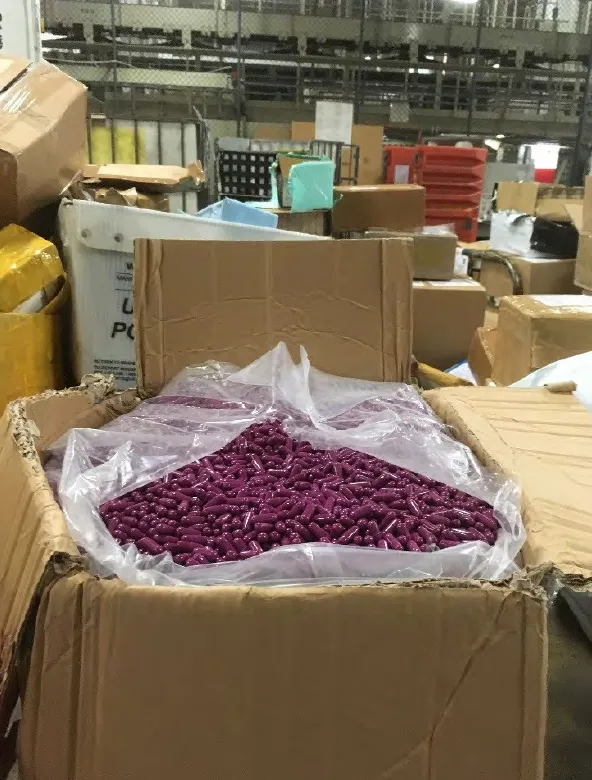
Photo: The U.S. Food and Drug Administration, Public domain, via Wikimedia Commons
A Market Without a Release Specification
In the United States, modafinil is a Schedule IV controlled substance available by prescription. That regulatory status is not a technicality. It reflects a controlled drug with known risks, a defined indication set, and a supply chain subject to federal oversight. The online market operates outside that framework. Vendors may describe their products as generic Provigil, pharmaceutical-grade, or manufactured in an FDA-inspected facility, but those claims are marketing statements, not analytical certificates. A tablet purchased from an unverified website has no release specification that a clinician or patient can inspect.
The distinction matters because the question is not simply whether a pill contains modafinil. It is whether the pill contains the labeled amount, whether it contains anything else, and whether the manufacturing process has controlled impurities, microbial load, and dissolution. In a regulated supply chain, those questions are answered before release. In a gray-market supply chain, they are answered, if at all, by the seller.
What Laboratory Testing Actually Shows
Analytical testing of unregulated modafinil products has repeatedly found variability. Some samples contain modafinil at doses above or below the label. Some contain no modafinil at all. Others contain different stimulants, including caffeine, ephedrine, or methamphetamine-related compounds. Adulteration is not uniform, and it would be inaccurate to suggest that every online tablet is contaminated. The clinical point is that the patient cannot know which scenario applies without testing the specific product, and even testing has limits.
Identity testing can confirm the presence of a compound, but it may not quantify potency or detect every adulterant. Reagent tests are useful for some substances but are not a comprehensive purity assessment. Fentanyl test strips can detect fentanyl in a dissolved sample, but a negative result does not establish that a tablet is free of other dangerous adulterants. Laboratory methods such as liquid chromatography-mass spectrometry provide more information, but they are not available at the point of use and cannot guarantee the next tablet in the same package.
The phrase 'pharmaceutical-grade' is especially unhelpful in this context. In legitimate manufacturing, grade refers to compliance with established standards for identity, strength, purity, quality, and labeling. A website claim does not demonstrate any of those things. Without batch records, certificates of analysis tied to a verified laboratory, and a chain of custody, the phrase is closer to branding than to quality assurance.
Enforcement Is Real but Not a Guarantee
US enforcement against illegal modafinil sales is active. The Food and Drug Administration issues warning letters to websites marketing unapproved drugs. Customs and Border Protection seizes incoming shipments. The Drug Enforcement Administration enforces Schedule IV controls, and the Department of Justice has prosecuted operators of illegal online pharmacies. These actions matter, but they do not create a safe gray market. Domain names change, storefronts migrate, and small international shipments are difficult to intercept at scale.
Patients sometimes assume that a package arriving without interception implies legitimacy. It does not. It implies only that the package was not stopped. The absence of a regulatory inspection is not evidence of quality. Similarly, a vendor's claim that a product ships from a US warehouse does not establish that the product was manufactured under US standards or that the seller is registered with the DEA.
Clinical Consequences of Unpredictable Exposure
From a clinical standpoint, an unregulated modafinil product creates uncertainty at every stage. A patient may take a dose that is higher than expected and experience agitation, insomnia, headache, palpitations, or anxiety. A patient may take a dose that is lower than expected and conclude that modafinil does not work. If the tablet contains another stimulant, the adverse effect profile changes entirely. If it contains an adulterant, the risk may be unrelated to modafinil's known pharmacology.
Drug interactions become harder to predict as well. A clinician managing a patient on warfarin, hormonal contraceptives, or other CYP3A4 substrates cannot assume that the actual exposure matches the labeled dose of a legitimate product. The same is true for patients with cardiovascular disease or psychiatric vulnerability. The clinical history may say modafinil, but the pharmacology may be something else.
Harm Reduction Without Endorsement
Clinicians should not endorse gray-market purchasing, but they should be prepared for disclosure. A nonjudgmental question about where a medication was obtained can open a useful conversation. If a patient is using an unregulated product, the first message is that the supply chain is not verifiable and the safest course is to transition to a prescribed product from a licensed US pharmacy. The second message is practical: do not assume that half a tablet is safer, because potency is unknown. Do not combine the product with alcohol or other stimulants without discussing the added risk. Seek urgent care for chest pain, severe agitation, psychosis, rash, or other serious symptoms.
Harm-reduction resources can supplement, but not replace, supply-chain safety. Fentanyl test strips and reagent testing may provide limited information, and patients should understand their limitations. Naloxone is relevant when opioid adulteration is a possibility, though modafinil-specific data on fentanyl adulteration are limited. The most effective harm-reduction step remains obtaining medication through a licensed prescriber and pharmacy.
The Telehealth Supply-Chain Blind Spot
Telehealth has expanded access to legitimate prescribing, but it has also created a new point of confusion. A patient may receive a valid prescription through a telehealth visit and still purchase a gray-market product because it is cheaper or faster. A clinician who discusses modafinil should therefore ask not only whether the patient is taking it, but where it came from. The same skepticism that patients are encouraged to apply to online health claims should extend to online pharmacies.
Conclusion
Counterfeit and unregulated modafinil products are a supply-chain problem, not a matter of buyer preference. The label on a legitimate product is backed by manufacturing controls and regulatory oversight. The label on a gray-market tablet is a claim. Clinicians can help patients understand that distinction without moralizing, and they can redirect care toward verified prescribing channels. Alertness is not worth an unknown tablet.