Modafinil as Neuroprotective Agent: Separating Preclinical Promise From Clinical Evidence in Neuroinflammation Research
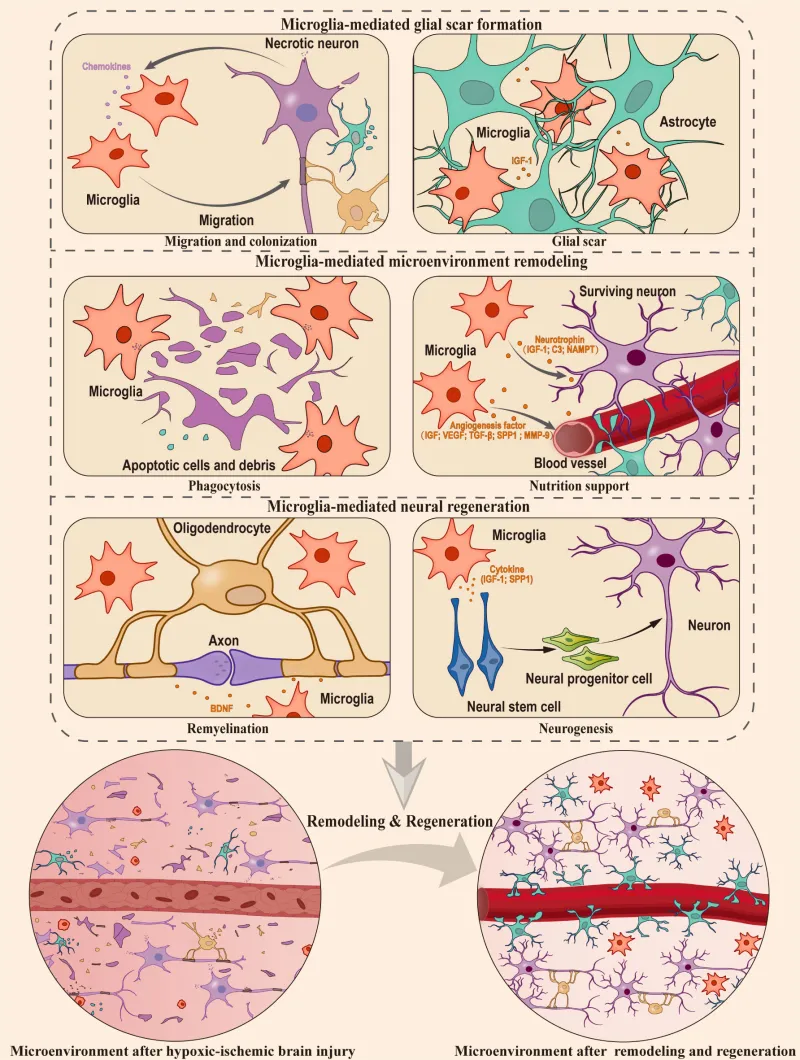
Photo: neuroscience brain inflammation microglia research laboratory, via www.frontiersin.org
Modafinil entered clinical practice as a wakefulness promoter. Its approved indications in the United States — narcolepsy, shift work sleep disorder, and obstructive sleep apnea-associated sleepiness — are defined by the drug's capacity to sustain arousal and counteract pathological somnolence. Yet the pharmacological profile of modafinil is considerably more complex than its regulatory classification implies, and a growing body of research has begun to characterize the drug's interactions with inflammatory signaling pathways, microglial activation states, and oxidative stress cascades in ways that may have clinical relevance well beyond sleep-wake regulation.
For clinicians and informed patients, the challenge is not simply identifying these findings — the literature is accessible — but evaluating them with appropriate epistemic discipline. Preclinical enthusiasm has a documented history of failing to translate into human therapeutic benefit. What follows is an attempt to map the current evidence with precision, acknowledging both its genuine promise and its significant limitations.
Microglial Modulation: The Core Mechanism Under Investigation
Microglia, the resident immune cells of the central nervous system, occupy a central position in the neuroscience of neuroinflammation. In their homeostatic state, microglia perform surveillance and synaptic pruning functions essential to healthy neural circuit maintenance. When activated by pathological stimuli — including protein aggregates, ischemic injury, viral infection, or traumatic insult — they shift toward pro-inflammatory phenotypes characterized by elevated cytokine release, reactive oxygen species production, and neurotoxic signaling.
Several preclinical studies have demonstrated that modafinil can attenuate microglial activation in rodent models of neuroinflammation. A frequently cited mechanism involves modafinil's influence on the NF-κB signaling pathway, a master regulator of inflammatory gene expression. In vitro work using lipopolysaccharide-stimulated microglial cell lines has shown that modafinil exposure reduces NF-κB nuclear translocation and downstream production of pro-inflammatory cytokines including TNF-α, IL-1β, and IL-6. These are not trivial targets: this cytokine triad is implicated in the pathophysiology of conditions ranging from Alzheimer's disease and Parkinson's disease to multiple sclerosis and traumatic brain injury.
Additionally, modafinil has demonstrated antioxidant properties in several animal models, attenuating lipid peroxidation and preserving mitochondrial function in neuronal tissue subjected to oxidative challenge. Given that mitochondrial dysfunction and oxidative stress are convergent features of most neurodegenerative diseases, these findings have attracted attention from researchers working in those fields.
Post-Concussion Syndrome and Traumatic Brain Injury: Early Clinical Signals
Among the clinical contexts in which modafinil's potential neuroprotective properties have received the most direct investigation, traumatic brain injury (TBI) and post-concussion syndrome stand out. Fatigue and cognitive dysfunction are among the most persistent and debilitating sequelae of TBI, and modafinil's established efficacy in fatigue-related conditions provided a rational basis for clinical investigation.
A number of small controlled trials and observational studies conducted over the past two decades have examined modafinil in TBI populations. Results have been mixed but modestly encouraging in the domain of fatigue reduction and cognitive processing speed. Crucially, however, these studies were not designed to test neuroprotective mechanisms — they measured functional outcomes, not inflammatory biomarkers or neuroimaging correlates of tissue preservation. The symptomatic improvements observed may reflect the drug's wakefulness-promoting properties rather than any direct anti-inflammatory or neuroprotective action.
This distinction matters enormously. A drug that reduces fatigue in a TBI patient is clinically useful. A drug that reduces neuroinflammation and thereby slows secondary neurodegeneration is transformative. The current evidence does not establish the latter for modafinil in human populations, even as preclinical data continues to suggest the mechanism is biologically plausible.
Neurodegenerative Disease: Preclinical Interest, Clinical Absence
In the context of Parkinson's disease, modafinil has been studied primarily as a symptomatic treatment for excessive daytime sleepiness, a common non-motor feature of the condition. Several randomized controlled trials support its efficacy for this indication. What those trials do not — and were not designed to — assess is whether modafinil's anti-inflammatory properties, demonstrated in dopaminergic neuron models in rodents, translate into any disease-modifying effect in human patients.
The gap between preclinical models and clinical reality is particularly acute in neurodegeneration research. Dozens of compounds have demonstrated neuroprotective effects in rodent models of Parkinson's and Alzheimer's disease without producing comparable benefits in human trials. The reasons are multifactorial: species differences in neuroinflammatory biology, the complexity of chronic human disease versus acute experimental injury, and the challenge of detecting disease modification against a background of progressive neurodegeneration over clinically relevant timescales.
For modafinil specifically, no adequately powered, prospectively designed clinical trial has examined disease-modifying outcomes in any neurodegenerative condition. This is not evidence of absence — it reflects the early stage of this research program — but clinicians and patients should be clear that neuroprotective claims in the context of Alzheimer's or Parkinson's disease remain speculative when applied to human therapeutics.
Chronic Inflammatory Conditions and Long-Term Users: Risk-Benefit Framing
For patients taking modafinil long-term for approved indications, the question of whether the drug's anti-inflammatory properties confer incidental neuroprotective benefit is scientifically interesting but clinically premature. There are no longitudinal studies examining inflammatory biomarker trajectories or neuroimaging outcomes in long-term modafinil users relative to matched controls.
What can be said with more confidence is that modafinil does not appear to exacerbate neuroinflammation through its primary mechanism of action, and that its relatively favorable safety profile — compared, for example, to traditional amphetamine-class stimulants — does not introduce obvious inflammatory liability. For patients managing conditions characterized by chronic neuroinflammation, such as multiple sclerosis or systemic lupus erythematosus with CNS involvement, modafinil's use for fatigue management is supported by clinical evidence, while any additional anti-inflammatory benefit remains unproven.
What the Evidence Actually Supports — and What It Does Not
A responsible summary of the current literature yields the following conclusions. Modafinil demonstrably modulates inflammatory signaling in cell culture and animal models, with consistent findings across multiple research groups. These effects are mechanistically plausible given the drug's interactions with dopaminergic and adrenergic systems, which are themselves capable of influencing microglial activation states. Early clinical data in TBI and fatigue-related conditions suggest functional benefits that may be partly mediated by anti-inflammatory mechanisms, though this has not been directly tested.
What the evidence does not support is the clinical deployment of modafinil as a neuroprotective or anti-inflammatory therapy in any condition for which it is not already approved. Nor does it support marketing the drug on the basis of these properties to patients seeking cognitive protection against aging or neurodegeneration — a framing that has begun to appear in wellness and biohacking communities with concerning frequency.
The science is genuinely interesting. The therapeutic applications, if they exist, will require rigorous human trials to establish. Until that evidence exists, the appropriate clinical posture is one of informed curiosity rather than therapeutic application.