When Sharper Focus Becomes a Cognitive Trap: Modafinil, Default Mode Network Suppression, and the Hidden Cost to Strategic Thinking
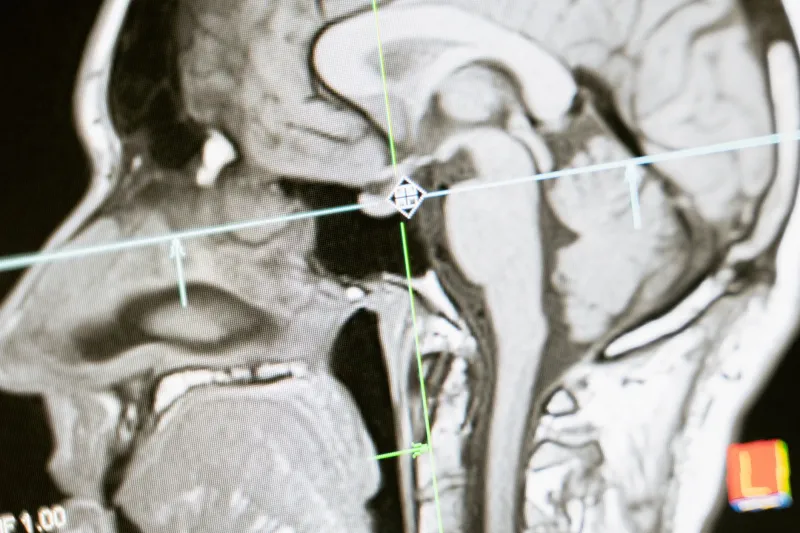
The appeal of modafinil in professional and academic circles has never been difficult to understand. A medication that promotes wakefulness, sharpens attentional control, and reduces the cognitive drag of fatigue seems, on its surface, like an unambiguous cognitive asset. Yet a growing body of neuroimaging research and cognitive neuroscience is complicating that picture in ways that have direct clinical relevance—particularly for users whose work demands not just focused execution, but integrative reasoning, strategic foresight, and the kind of insight-driven problem-solving that rarely emerges from a state of rigid attentional lock-in.
The central tension is this: the same neurochemical mechanisms that make modafinil effective at sustaining vigilance and task-directed focus may simultaneously suppress the brain's default mode network (DMN)—a constellation of regions whose activity is not merely idle noise, but an essential substrate for some of the most sophisticated cognitive functions humans perform.
The Default Mode Network: Not Idle, but Indispensable
For much of the twentieth century, neuroscientists treated brain activity during rest or mind-wandering as little more than background static—metabolic overhead with no functional significance. That view was overturned decisively by resting-state fMRI research beginning in the late 1990s and accelerating through the 2000s. The DMN, comprising the medial prefrontal cortex, posterior cingulate cortex, angular gyrus, and hippocampal formation, exhibits robust, coordinated activity precisely when individuals are not engaged in externally directed tasks.
What does this network actually do? The current consensus implicates DMN activity in a remarkably high-order set of processes: autobiographical memory consolidation, prospective thinking and future simulation, mentalizing and social cognition, creative ideation, and the integration of disparate information streams into coherent conceptual frameworks. In short, the DMN is not the brain at rest—it is the brain doing the work that no checklist can capture.
Critically, the DMN operates in an anti-correlated relationship with the task-positive network (TPN), the set of regions—including the dorsolateral prefrontal cortex and posterior parietal cortex—that activates during focused, externally directed cognitive effort. When TPN engagement rises, DMN activity falls, and vice versa. This reciprocal dynamic is not pathological; it is adaptive. The brain toggles between these modes depending on what the moment demands.
Where Modafinil Enters the Picture
Modafinil's primary pharmacological footprint involves inhibition of dopamine reuptake, with secondary effects on norepinephrine, histamine, and orexin systems. The net result is heightened arousal, enhanced prefrontal dopaminergic tone, and sustained engagement of the task-positive attentional network. For shift workers battling circadian disruption, or for individuals managing narcolepsy, this profile is precisely what is needed.
But for the knowledge worker, the strategist, the researcher, or the clinician who must not only process information but synthesize it into novel frameworks, the implications are less straightforward. Functional neuroimaging studies examining modafinil's effects on resting-state connectivity have found evidence of reduced DMN coherence under the drug's influence. A 2014 study published in Neuropsychopharmacology reported that modafinil administration altered functional connectivity within the DMN in healthy volunteers, with patterns suggesting reduced internally directed processing. Subsequent work has corroborated the finding that catecholaminergic enhancement—of which modafinil is a relatively clean example—tends to sharpen external attentional orienting at the expense of the inward, associative processing that DMN activity supports.
The behavioral implications are not merely theoretical. Cognitive psychologists distinguish between convergent thinking—the capacity to identify a single correct solution to a well-defined problem—and divergent thinking, which involves generating multiple novel associations and possibilities from a single starting point. Modafinil appears to selectively enhance the former while leaving the latter either unchanged or mildly impaired, particularly in individuals with higher baseline cognitive function. This pattern is consistent with what DMN suppression would predict.
Strategic Thinking as a DMN-Dependent Process
Long-range planning and strategic reasoning are not simply extended versions of focused task execution. They require the brain to hold multiple scenarios in working memory simultaneously, simulate future states with probabilistic weighting, integrate past experience with present constraints, and identify non-obvious connections between seemingly unrelated domains. These are precisely the cognitive operations that depend on robust DMN-TPN coordination—not the suppression of one network in favor of the other, but a fluid, well-timed alternation between focused analysis and diffuse synthesis.
When modafinil tips this balance persistently toward TPN dominance, users may find themselves executing tasks with unusual efficiency while simultaneously losing access to the broader cognitive horizon that makes those tasks meaningful within a larger strategic context. The experience is sometimes described clinically as productive tunnel vision—a state in which the immediate problem is handled with precision while adjacent considerations fail to surface.
This phenomenon has particular relevance for professionals in fields where the most consequential cognitive work is not the rapid processing of well-defined inputs but the slow, often non-linear development of insight: physicians formulating complex differential diagnoses, attorneys constructing multi-layered legal strategies, researchers designing studies that ask genuinely novel questions, and executives navigating competitive landscapes that resist algorithmic analysis.
Calibrating Use: Timing, Dosing, and Cognitive Task Matching
None of this is an argument against modafinil's clinical utility. It is, rather, an argument for cognitive task matching—a framework in which the decision to use a cognitive enhancer is informed by the nature of the work being undertaken, not simply by a generalized desire for sharper performance.
Several practical considerations follow from the neuroimaging and behavioral evidence:
Task-type assessment before dosing. Users should distinguish between days dominated by execution-heavy tasks—writing to a detailed outline, processing structured data, attending meetings requiring sustained vigilance—and days requiring generative, exploratory thinking. Modafinil may confer genuine benefit in the former context and impose a net cost in the latter.
Timing as a lever. Because modafinil's half-life ranges from 12 to 15 hours, morning dosing will exert attentional effects well into the afternoon and evening. For users who reserve mornings for strategic planning or creative synthesis, delaying the dose until midday may preserve DMN-accessible cognitive states during the hours when they are most needed.
Dose minimization for complex reasoning tasks. The relationship between dopaminergic tone and cognitive flexibility follows an inverted-U curve—a well-established principle in prefrontal pharmacology. Lower doses may provide sufficient arousal benefit without driving the system into the rigid, high-tone state associated with DMN suppression. Clinical reports and some controlled data suggest that doses below the standard 200 mg threshold (e.g., 50–100 mg) may offer a more favorable balance for insight-dependent work.
Deliberate off-periods. Clinicians advising long-term modafinil users should consider recommending structured drug-free intervals specifically designed to allow DMN-dependent processing to recover its baseline flexibility. This is distinct from cycling for tolerance management—it is cycling for cognitive mode recovery.
A More Nuanced Clinical Conversation
The framing of modafinil as a straightforward cognitive enhancer has always been a simplification. What the drug enhances is a specific mode of cognition—one that is genuinely valuable under specific circumstances and genuinely limiting under others. The clinical and public health imperative is to ensure that users, particularly those self-medicating in professional contexts, are equipped with a sufficiently sophisticated model of what the drug actually does to their cognitive architecture.
For prescribers, this means moving beyond wakefulness as the primary outcome variable and engaging patients in more granular conversations about the texture of their cognitive demands. For informed users, it means resisting the assumption that more focus is always better, and developing the metacognitive awareness to recognize when the brain's default wandering is not a problem to be corrected but a process to be protected.